


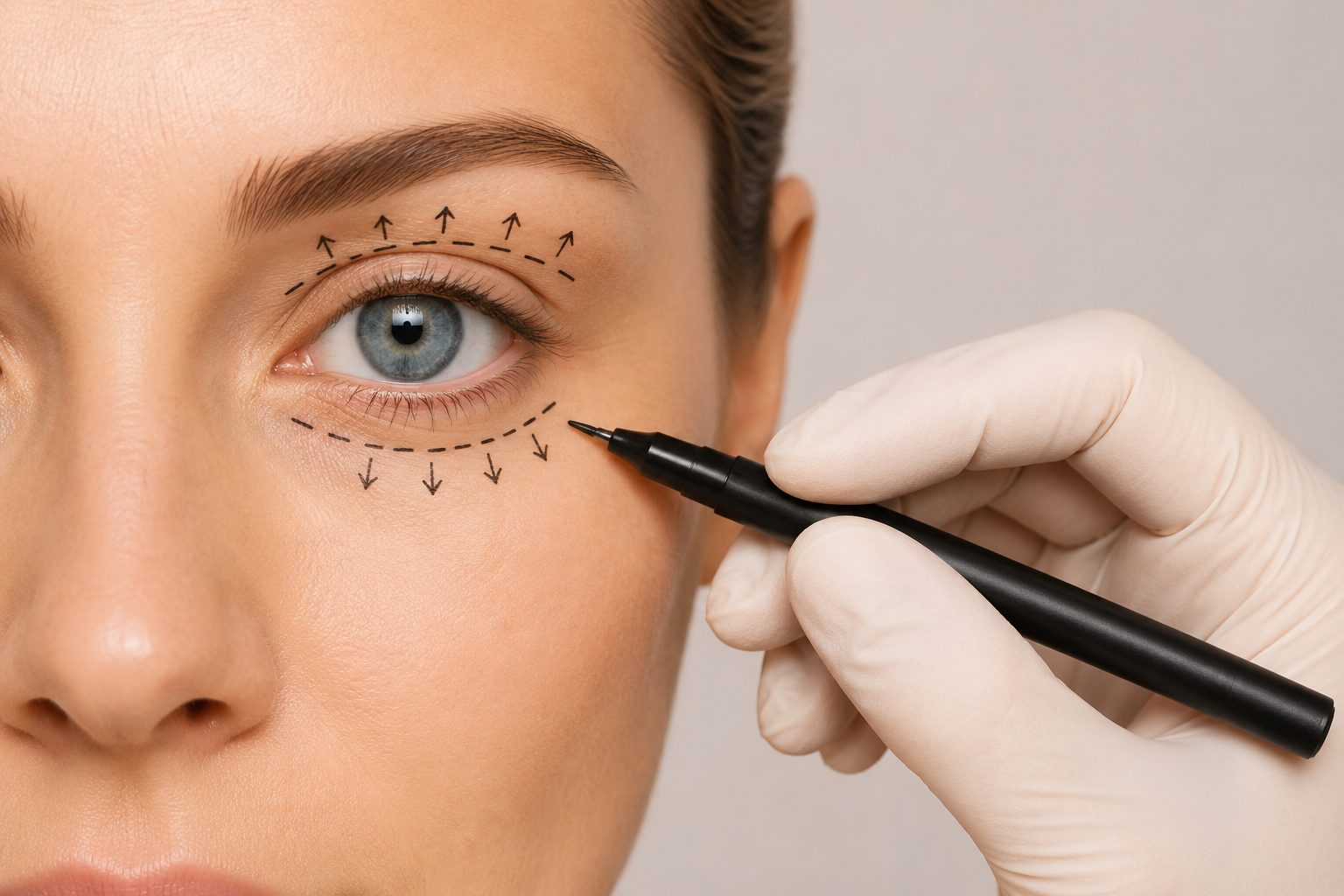
A More Refreshed, Balanced and Natural Eye Area
Blepharoplasty is an eyelid surgery that addresses excess skin, prominent fat compartments and age-related or structural changes affecting the upper and/or lower eyelids and the surrounding eye area.
Excess skin and changes in the eyelid crease are assessed in the upper eyelid, while puffiness, fat distribution and skin quality are evaluated in the lower eyelid. Surgical planning considers the overall anatomy of the eye area and the patient's facial proportions rather than focusing on a single eyelid alone.
What Is Blepharoplasty?
Blepharoplasty is a surgical procedure that addresses excess skin, prominent fat compartments and anatomical changes in the upper and/or lower eyelids to create a more balanced appearance around the eyes.
With aging, the eyelid skin may lose elasticity, excess skin may develop in the upper eyelid and the fat compartments of the lower eyelid may become more prominent. In some patients, these features may appear earlier because of genetic and anatomical characteristics rather than aging alone.
Surgical planning does not focus solely on removing excess tissue. The structure of the upper and lower eyelids, brow position, the under-eye-to-cheek transition, fat distribution and overall facial anatomy are evaluated together.
Who May Be a Candidate for Blepharoplasty?
Patients who are concerned about structural or age-related changes in the upper or lower eyelids may be evaluated for blepharoplasty following a detailed assessment of the eye area.
Patients with noticeable excess skin in the upper eyelid
Patients concerned about changes in the upper-eyelid crease
Patients with noticeable lower-eyelid bags or prominent fat compartments
Patients seeking a more refreshed and balanced appearance around the eyes
Patients who would like the upper and lower eyelids to be evaluated together
Patients whose general health is suitable for surgery and who have realistic expectations about the results
Not every change around the eyes can be corrected with blepharoplasty. Brow ptosis, under-eye discoloration, midface volume loss or other anatomical features should be assessed separately to determine the appropriate approach.
How Are the Upper and Lower Eyelids Evaluated?
The upper and lower eyelids have different anatomical characteristics. Therefore, the surgical approach is planned separately for each area.
Upper Eyelid Skin
The amount of excess upper-eyelid skin, the natural eyelid crease and its relationship with the surrounding eye area are evaluated.
Upper Eyelid Fat Compartments
The distribution and prominence of the upper-eyelid fat compartments are assessed and included in the surgical plan when necessary.
Lower Eyelid Bags
The position and prominence of lower-eyelid fat are evaluated together with the transition between the under-eye area and cheek.
Lower Eyelid Skin
Lower-eyelid skin quality, the degree of laxity and the existing supporting structures of the eyelid are evaluated together.
Preoperative Planning for Blepharoplasty
In eyelid surgery, accurate assessment of the overall anatomy around the eyes is as important as determining the amount of excess tissue. Planning therefore includes examination of the surrounding anatomical structures as well as the upper and lower eyelids.
Assessment of Eyelid Anatomy
The skin of the upper and lower eyelids, natural eyelid creases, fat distribution and overall structure of the eye area are evaluated.
Relationship Between the Brows and Eye Area
Brow position, its relationship with the upper eyelid and whether the changes around the eyes arise from the eyelid alone or also involve surrounding structures are analyzed.
Personalized Surgical Plan
It is determined whether the upper eyelid, lower eyelid or both areas should be treated and which tissues require surgical intervention.
Upper Eyelid Blepharoplasty
The primary aim of upper-eyelid blepharoplasty is to address excess skin and fat according to the individual while preserving the natural anatomy of the eyelid.
The incision is generally planned within or in harmony with the natural upper-eyelid crease. The amount of skin to be removed is determined beforehand, and prominent fat compartments are addressed when necessary.
The incision plan is created with consideration for the existing natural crease of the upper eyelid.
The aim is to preserve the natural eyelid structure by avoiding unnecessary tissue removal.
Creating an upper eyelid appearance that is harmonious with the brow and the rest of the eye area is part of surgical planning.
Lower Eyelid Blepharoplasty
In lower-eyelid surgery, the source of puffiness, fat distribution, skin characteristics and the under-eye-to-cheek transition are evaluated together.
Depending on individual needs, the surgical approach may include an external incision close to the lash line or a transconjunctival approach performed through the inner surface of the eyelid. The appropriate method is determined after examination.
The amount and under-eye distribution of prominent fat compartments are evaluated individually.
A balanced transition between the lower eyelid and cheek is an important element of surgical planning.
The existing tone and supporting structures of the lower eyelid are evaluated, and the surgical approach is determined accordingly.
How Is Blepharoplasty Performed?
The surgical technique is determined according to the type and degree of changes in the upper or lower eyelid. The same amount of skin or fat is not treated in every patient.
Surgical Marking
The areas planned for treatment and the natural anatomical boundaries are identified before surgery.
Skin and Fat Tissue Adjustment
Excess skin and prominent fat compartments are carefully addressed in the areas where treatment is needed.
Preservation of Eyelid Anatomy
Surgical planning prioritizes preservation of the functional structures and natural appearance of the eyelid.
Incision Closure
Depending on the type of surgery, the necessary incisions are closed with fine sutures and postoperative follow-up begins.
How Is a Natural-Looking Eye Area Achieved?
The aim of blepharoplasty is not to completely change the shape of the eyes or create an overly tight appearance, but to achieve an eyelid appearance that is harmonious with the patient’s existing anatomy.
The aim is to address only the necessary tissues while preserving natural volume as much as possible.
Existing anatomical differences between the right and left eyelids are taken into account during surgical planning.
The aim is for the eye area to remain harmonious with the brows, midface and the patient’s overall facial character.
Recovery After Blepharoplasty
The recovery process may vary depending on the scope of the procedure and the patient’s individual healing characteristics.
Swelling, bruising, tenderness and temporary tightness may occur around the eyes during the first days. It is important to follow the postoperative care plan recommended by the surgeon and attend scheduled follow-up visits.
Swelling and bruising are generally more noticeable during this period. Keeping the head elevated and protecting the eye area may be recommended.
As swelling and discoloration gradually decrease, the return to daily and social activities is planned in a controlled manner.
As the tissues heal, the eyelid creases and the new appearance of the eye area become more clearly defined.
Blepharoplasty Results and Long-Term Appearance
After blepharoplasty, the aim is to reduce noticeable excess tissue and create a more balanced and refreshed appearance around the eyes that is harmonious with the patient’s facial structure.
Because of early postoperative swelling, the final result cannot be assessed immediately after surgery. As the tissues heal and swelling subsides, the eye area gradually develops a more natural appearance.
Surgery does not stop the aging process. Changes made to the eyelids may be long-lasting, although natural aging of the skin and surrounding tissues continues over time.
Frequently Asked Questions About Blepharoplasty
Can Upper and Lower Blepharoplasty Be Performed at the Same Time?
In suitable patients, upper- and lower-eyelid surgery may be considered within the same surgical plan. The need and suitability depend on the anatomy around the eyes and the scope of the planned procedures.
Will Blepharoplasty Change the Shape of My Eyes?
The primary aim of standard blepharoplasty planning is to address excess tissue while preserving the patient’s existing eye and eyelid anatomy. The effects of the selected technique may vary according to the patient’s baseline anatomy.
Can Under-Eye Bags Be Treated with Blepharoplasty?
Prominent lower-eyelid fat compartments may be addressed during blepharoplasty. However, not every under-eye fullness or discoloration has the same cause, so an anatomical assessment is required first.
Will There Be Scars After Surgery?
Scarring is expected with procedures that require incisions. In the upper eyelid, incisions may be planned within the natural eyelid crease; in the lower eyelid, they may be placed close to the lash line depending on the technique. Scar appearance varies according to individual healing characteristics.
Does Blepharoplasty Also Correct Brow Ptosis?
Blepharoplasty and brow lift are different procedures. If part of the upper-eyelid fullness is related to brow position, the brow area may need to be evaluated separately.
When Can I Return to Daily Activities?
The timing of return to daily activities varies according to the scope of surgery and the patient’s healing rate. Activity levels are gradually increased as early swelling and bruising decrease.
Are Blepharoplasty Results Permanent?
The changes achieved through surgery may be long-lasting, although the natural aging process continues. New age-related changes may develop around the eyes in later years.