

Natural Volume and Shape in Harmony with Your Body Proportions
Breast augmentation is a surgical procedure that may be planned using implants or, in suitable cases, fat grafting to increase breast volume, restore lost fullness or reduce existing asymmetry.
The aim is not only to increase breast volume, but to create a balanced appearance that is compatible with the patient's chest, breast tissue, skin characteristics and overall body proportions.
What Is Breast Augmentation?
Breast augmentation is a personalized aesthetic surgical procedure performed to increase breast volume, restore lost fullness or reduce differences in size between the breasts.
Breast volume may change due to genetics, pregnancy and breastfeeding, weight fluctuations or aging. Breast augmentation may be performed using implants, while fat grafting using the patient's own fat tissue may also be considered in suitable cases.
The main goal of planning is not simply to create larger breasts, but to achieve a result that is in harmony with the chest, breast tissue, skin characteristics and the patient's overall body proportions.
Who May Be a Candidate for Breast Augmentation?
Individuals who are dissatisfied with their breast volume or shape may be evaluated for breast augmentation options if their general health and expectations are suitable.
Individuals who feel that their breast volume is small in relation to their body proportions
Individuals who have experienced a decrease in breast volume after pregnancy, breastfeeding, weight loss or over time
Individuals who are concerned about loss of fullness in the upper part of the breasts
Individuals with differences in volume or shape between the breasts
Individuals who desire increased breast volume after breast development is complete
Individuals who approach the surgical process and achievable results with realistic expectations
In individuals with significant breast sagging, increasing volume alone may not be sufficient. In such cases, whether a breast lift should be performed together with augmentation is evaluated separately.
Preoperative Planning Process
Breast augmentation planning is not based solely on implant volume or a single measurement. Breast tissue characteristics and overall body proportions are evaluated together.
During the initial consultation, breast and chest measurements, skin characteristics, existing asymmetry, nipple position and the patient's expectations are evaluated to create an appropriate surgical plan.
Assessment of Breast Anatomy
Breast volume, breast base, skin characteristics, chest structure and possible differences between the two breasts are evaluated.
Defining the Desired Appearance
The desired volume and shape are discussed, and expectations are evaluated together with the results that can be achieved anatomically.
Creating the Surgical Plan
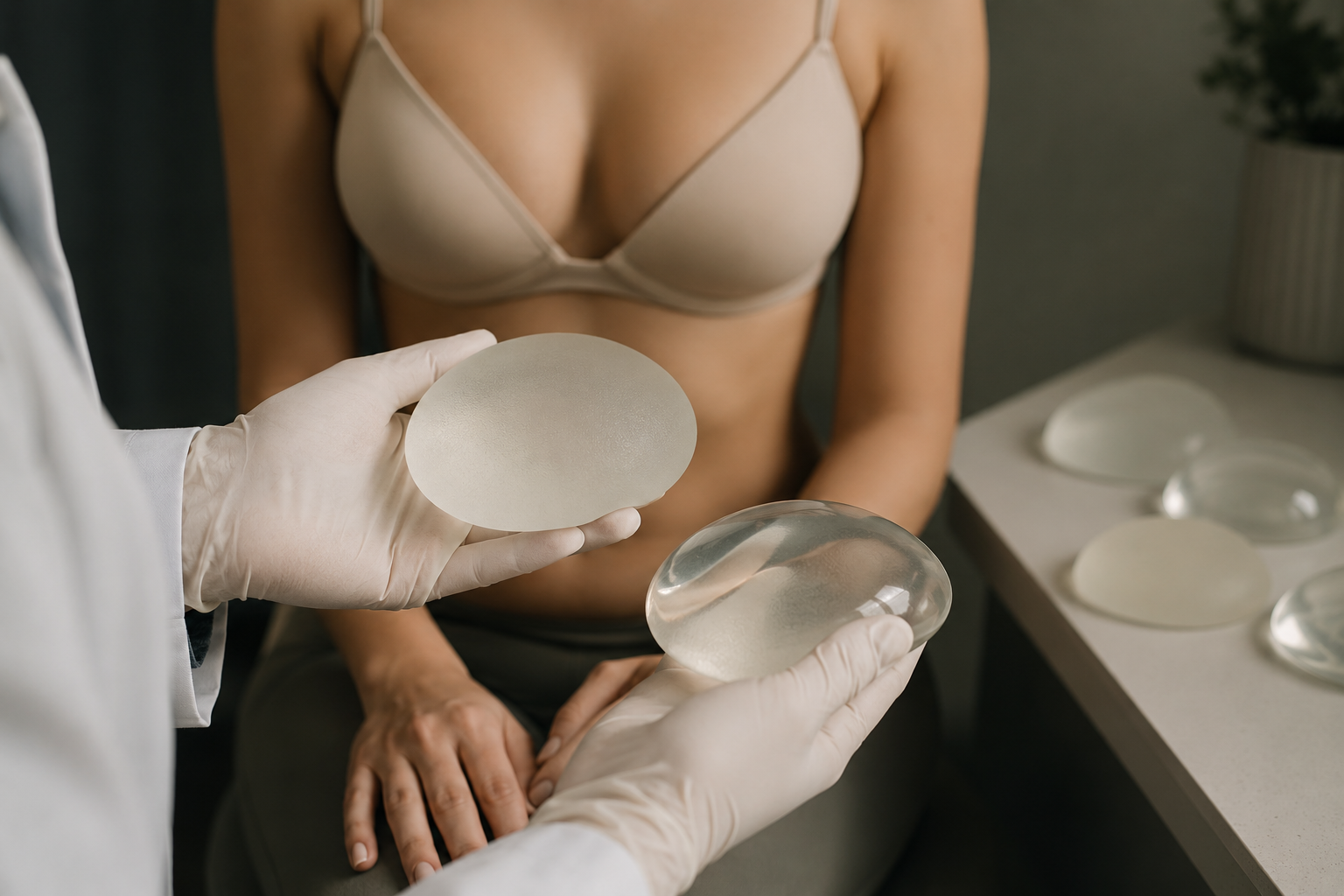
The surgical method, implant characteristics, incision site and implant placement are determined according to the patient's anatomy.
Approaches Considered in Breast Augmentation
The same technique is not used for every patient. The details of the procedure are determined according to breast tissue, desired volume, skin characteristics and the patient's anatomy.
Breast Augmentation with Implants
A surgical approach in which a breast implant with characteristics suitable for the patient's anatomy is used to increase breast volume.
Breast Augmentation with Fat Grafting
A method in which fat tissue obtained from different areas of the body is transferred to the breasts to enhance volume and contour in suitable patients.
Incision Planning
The incision site is planned in an appropriate and controlled location according to the implant used, the patient's breast anatomy and the surgical plan.
Implant Placement
The position of the implant in relation to the breast tissue or chest muscle is determined according to the patient's tissues, anatomy and desired outcome.
What Can Be Expected During Recovery?
Recovery after breast augmentation may vary depending on the method used, the extent of the surgical plan and the patient's individual healing characteristics.
In the early period, swelling, tightness, tenderness and temporary discomfort may occur. Using the supportive bra recommended by the physician, protecting the surgical area and attending follow-up appointments are important.
Rest is a priority. Tenderness, tightness and swelling may be experienced in the surgical area.
Swelling and tenderness gradually decrease. The time required to return to daily activities may vary according to individual healing.
As the tissues heal, the breast shape and implant position begin to take on a more natural appearance.
Implants and Long-Term Follow-Up
Breast implants are not devices guaranteed to remain unchanged for a lifetime. Therefore, regular long-term monitoring of the implants and breast health is important.
Over time, implant replacement or additional surgery may become necessary. The follow-up schedule is planned according to implant characteristics, the patient's health and the physician's recommendations.
Breast health and the condition of the implant are evaluated at regular intervals.
Any changes noticed in breast shape, sensation or related to the implant should be discussed with the physician.
The need for implant replacement or additional surgery in the future is evaluated individually.
Frequently Asked Questions About Breast Augmentation
How is implant size determined?
Implant selection is not based solely on the desired volume. The breast base, chest width, existing breast tissue, skin characteristics and the patient's desired appearance are evaluated together.
Is there an alternative to implants for breast augmentation?
In suitable patients, fat tissue obtained from other areas of the body may be used to enhance breast volume. The appropriate method is determined after an examination.
Does breast augmentation also correct sagging?
In some cases with mild volume loss, the appearance may improve; however, if significant sagging is present, a breast lift may need to be considered separately or together with augmentation.
When does the result begin to look more natural?
In the early period, the appearance changes over time due to swelling and tissue tightness. As healing progresses, the breast tissues and the tissues surrounding the implant gradually adapt.
Do breast implants need to be replaced?
Breast implants are not considered lifetime devices. Although there is no requirement to replace them after a specific number of years for every patient, implant replacement or additional surgery may become necessary over time. Regular follow-up is important.