

A More Balanced and Natural Appearance Between the Breasts
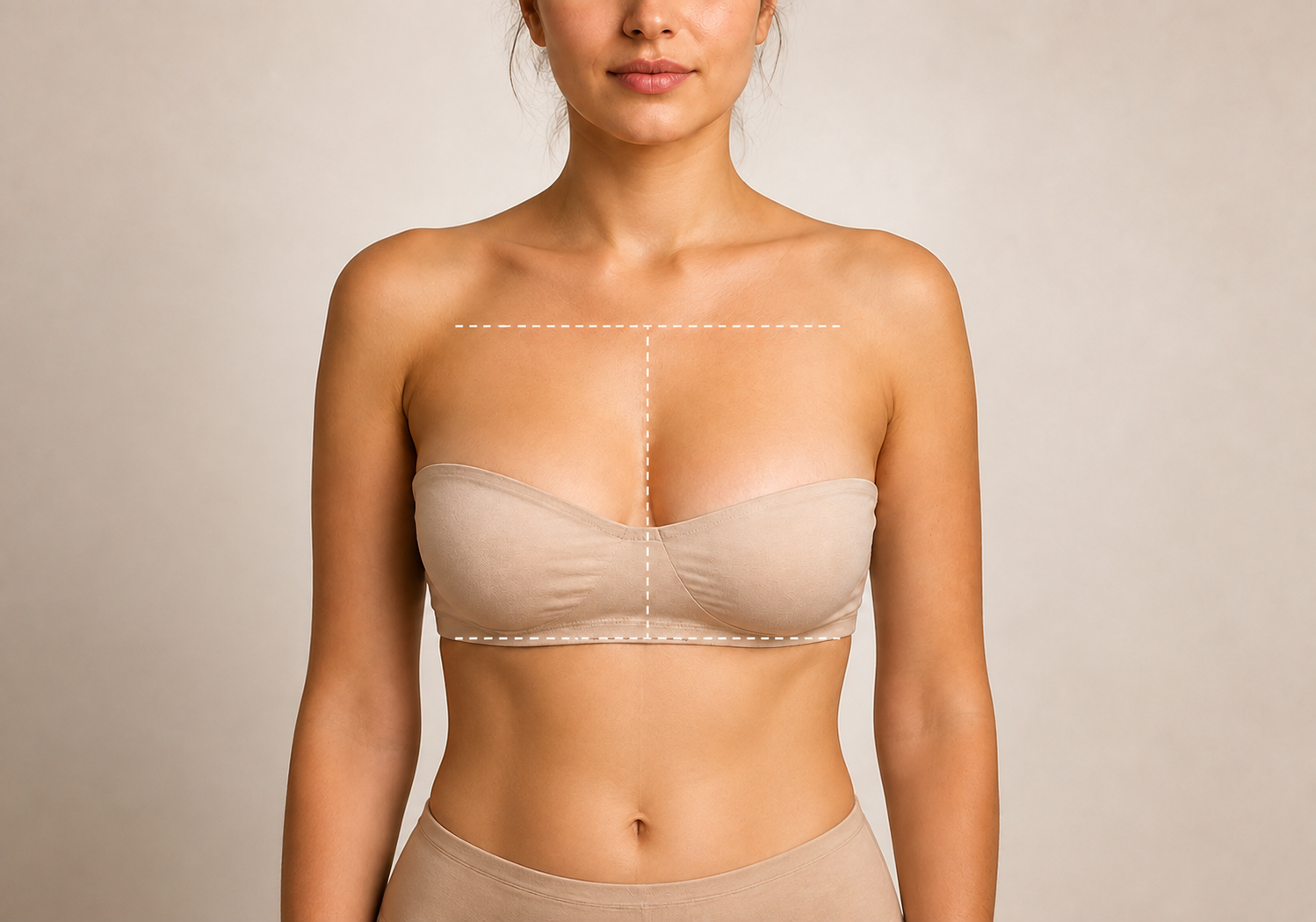
Breast asymmetry refers to differences in size, shape, position, nipple level or degree of sagging between the breasts. Asymmetric breast correction aims to create a more balanced appearance through personalized surgical planning.
Depending on the type and degree of asymmetry, augmentation, reduction, lifting, nipple repositioning or fat grafting may be considered individually or in combination.
What Is Breast Asymmetry?
Breast asymmetry refers to differences between the breasts in size, shape, position, nipple level or degree of sagging. Mild differences are very common, while more noticeable asymmetries may cause concern regarding aesthetic appearance and overall body balance.
The main goal of asymmetric breast correction is not to make both breasts completely identical, but to evaluate the existing anatomical differences and create a more balanced, proportionate breast appearance that is harmonious with the patient's body structure.
Surgical planning is not based solely on breast size. The breast base, nipple and areola position, degree of sagging, skin characteristics, chest structure and volume difference between the breasts are evaluated together.
What Can Cause Breast Asymmetry?
Breast asymmetry may be related to congenital anatomical characteristics or may become more noticeable as a result of changes that occur at different stages of life.
Natural Developmental Differences
During puberty, the breasts may not develop at the same rate. This may result in differences in breast volume, base width or position.
Pregnancy and Breastfeeding
After pregnancy and breastfeeding, differences may develop between the breasts in volume, skin elasticity and degree of sagging.
Weight and Age-Related Changes
Weight fluctuations and aging may not affect both breasts to the same degree and may make existing asymmetry more noticeable over time.
Anatomical and Structural Differences
Chest structure, breast base, nipple position or congenital developmental differences may affect breast symmetry.
Who May Be a Candidate for Asymmetric Breast Correction?
Individuals who are concerned about differences in shape, volume or position between their breasts may be evaluated for asymmetric breast correction following a detailed examination and medical assessment.
Individuals with a noticeable difference in volume or size between the breasts
Individuals whose nipples or inframammary folds are positioned at different levels
Individuals with more pronounced sagging or loss of shape in one breast than the other
Individuals whose breast asymmetry has become more noticeable after pregnancy, breastfeeding or weight changes
Individuals with noticeable differences in breast contour or breast base
Individuals whose general health is suitable for surgery and who have realistic expectations regarding the results
The degree and cause of breast asymmetry vary from person to person. Therefore, the appropriate approach is determined by evaluating the physical examination findings, breast anatomy, existing volume, degree of sagging and the patient's expectations together.
Preoperative Planning Process
Planning for asymmetric breast correction is based on evaluating each breast separately and then comparing their proportions with one another.
During the initial consultation, breast volumes, nipple levels, inframammary folds, degrees of sagging, breast base widths, skin characteristics and chest structure are evaluated. The procedure required for each breast is determined after this assessment.
Individual Assessment of Each Breast
Breast volume, base width, degree of sagging, nipple position and skin characteristics are evaluated separately for each breast.
Identifying the Source of Asymmetry
It is evaluated whether the difference is primarily related to volume, sagging, nipple position, breast base or a combination of factors.
Creating a Personalized Balancing Plan
The procedures to be performed on each breast are determined separately with the aim of creating a more balanced appearance that is harmonious with the patient's body proportions.
Approaches That May Be Used in Asymmetric Breast Correction
There is no single standard surgical method for breast asymmetry. The approach is planned individually according to the type and degree of difference between the breasts.
Breast Augmentation
Augmentation of the smaller breast using a suitable implant or other volume-enhancing methods may be considered to reduce the difference in volume between the breasts.
Breast Reduction
When one breast is noticeably larger than the other, reduction of excess tissue and skin in the larger breast may be planned.
Breast Lifting
If there is a difference in sagging or nipple level between the breasts, lifting procedures of different extents may be performed on one or both breasts.
Combined Correction
In some cases, different procedures may be combined within the same surgical plan, such as augmentation of one breast together with reduction or lifting of the other.
Which Differences Are Evaluated During Surgical Planning?
Breast asymmetry should not be assumed to result only from differences in breast volume. Multiple anatomical factors that influence breast shape are evaluated together during surgical planning.
The volume difference between the breasts, as well as the width and position of the breast bases on the chest, are evaluated.
Nipple and areola positions are compared to assess whether there are differences in height or direction between the breasts.
The inframammary fold, excess skin, degree of sagging and overall breast contour are examined separately on each side.
What Can Be Expected During Recovery?
Recovery after asymmetric breast correction may vary depending on the surgical techniques used and the extent of the procedures performed on each breast.
Swelling, tenderness, tightness and temporary bruising may occur after surgery. Using the medical support bra recommended by the physician, performing regular wound care and attending follow-up appointments are important for monitoring the recovery process.
Rest and controlled movement are prioritized. Swelling, tenderness and a feeling of tightness may occur.
Swelling gradually decreases. The return to daily activities and physical exercise is planned according to the individual and the procedures performed.
As the breast tissues heal, the new contours and the balance between the breasts can be assessed more clearly.
Results and Long-Term Balance
The aim of asymmetric breast correction is not to make the two breasts mathematically identical, but to reduce existing anatomical differences as much as possible and create a more balanced appearance.
Small differences naturally exist in the human body. In addition, aging, pregnancy, breastfeeding and significant weight changes may affect breast shape and symmetry again over time. For this reason, results are also evaluated during long-term follow-up.
Frequently Asked Questions About Asymmetric Breast Correction
Will both breasts be completely identical after asymmetric breast correction?
The aim of surgery is to reduce existing differences as much as possible and create a more balanced appearance. Because minor natural asymmetries exist in the human body, it may not always be possible for both breasts to be completely or mathematically identical.
Is the same procedure performed on both breasts?
No. Different procedures may be performed on each breast depending on the type of asymmetry. For example, volume enhancement may be performed on one breast while reduction or lifting is considered for the other.
Will there be scars after asymmetric breast correction?
Scarring is expected with procedures that require surgical incisions. The location and length of the scars vary according to the technique used, while their appearance may be affected by the patient's skin characteristics and wound-healing process.
Are the results permanent?
The balance achieved through surgery may be maintained for a long time; however, aging, pregnancy, breastfeeding and significant weight changes may affect the shape of the breast tissue over time.
Can asymmetric breast correction be combined with other procedures?
Yes. Depending on individual needs, different procedures such as breast augmentation, breast reduction, breast lifting or fat grafting may be considered within the same surgical plan.