

Natural Volume and Breast Shape in Harmony with Your Body Proportions
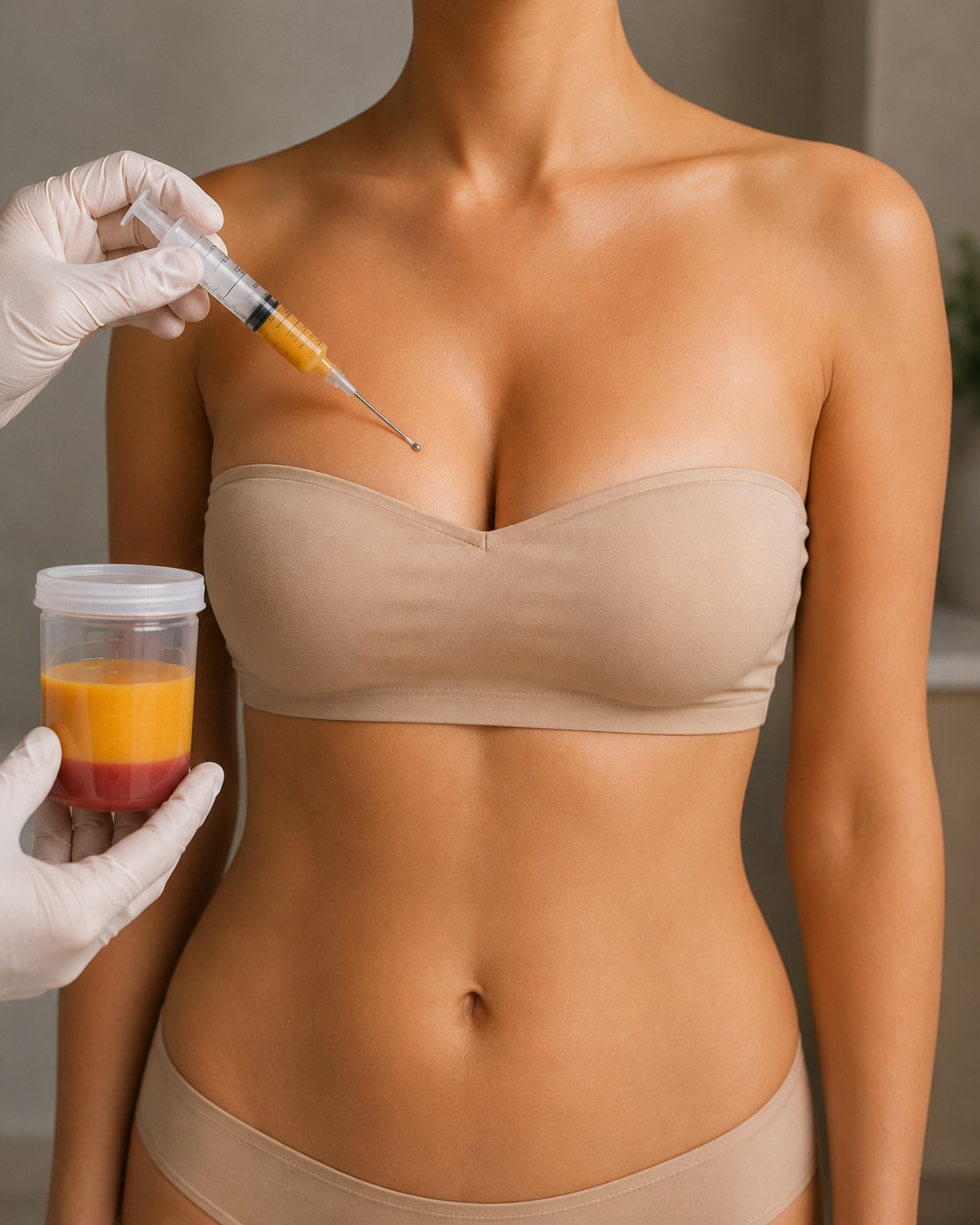
Fat grafting to the breast is a surgical procedure in which the patient's own fat tissue is obtained from suitable areas of the body using liposuction, prepared and then transferred to the breast area in a controlled manner.
The procedure may be considered in suitable patients who desire a more limited and natural-looking increase in volume or who wish to address localized volume deficiencies or asymmetries in the breast contour. The amount of fat that can be used, available donor-area fat tissue, breast anatomy and the desired outcome are evaluated together.
What Is Fat Grafting to Breast?
Fat grafting to the breast is a surgical procedure in which the patient's own fat tissue is obtained from suitable areas of the body using liposuction, prepared and then transferred to the breast area in a controlled manner.
This method may be considered in suitable patients who desire a more limited and natural-looking increase in breast volume, prefer not to use implants or wish to address localized volume deficiencies in the breast contour.
Fat transfer involves two areas within the same procedure. Fat is obtained from suitable donor areas such as the abdomen, waist, hips or thighs, while the prepared fat tissue is distributed in small amounts to the areas of the breast that require support. The amount of fat that can be used and the achievable increase in volume vary according to the patient's anatomy.
Who May Be a Candidate for Fat Grafting to Breast?
Patients who wish to enhance breast volume using their own fat tissue may be evaluated for fat grafting following a detailed examination and medical assessment.
Individuals who desire a more limited and natural-looking increase in breast volume
Suitable patients who prefer not to use implants for breast augmentation
Individuals with localized volume loss or differences in fullness within the breast contour
Individuals who wish to address limited volume or contour asymmetry between the breasts
Individuals with suitable donor areas and sufficient fat tissue for harvesting
Individuals whose general health is suitable for surgery and who have realistic expectations regarding the results
Suitability for fat grafting to the breast is not determined solely by the desired breast size. Breast anatomy, existing volume, skin characteristics, available donor areas, general health and the desired outcome are evaluated together to create a personalized treatment plan.
Preoperative Planning Process
For successful fat grafting planning, both the breast area and the donor areas from which fat will be obtained are evaluated together.
During the examination, existing breast volume, breast contour, asymmetries, skin characteristics and the desired increase in volume are evaluated. At the same time, the amount and distribution of fat tissue in possible donor areas such as the abdomen, waist, hips or thighs are assessed.
Assessment of Breast Anatomy
Existing breast volume, breast base, contour characteristics, asymmetries and areas requiring volume support are evaluated in detail.
Identifying Donor Areas
Potential donor areas are evaluated to determine the amount of suitable fat tissue and the liposuction plan for the procedure.
Creating the Volume and Contour Plan
The areas of the breast where fat will be distributed and the method of distribution are planned individually according to the desired volume, natural breast shape and body proportions.
How Is Fat Grafting to Breast Performed?
Fat grafting to the breast consists of complementary stages: harvesting the fat tissue, preparing it and transferring it to the breasts in a controlled manner.
Fat Harvesting
Fat tissue is harvested from the planned donor areas in a controlled manner using liposuction. Donor-area selection is based on the patient's fat distribution and the surgical plan.
Preparation of Fat Tissue
The harvested fat tissue is prepared for transfer. The preparation method may vary according to the surgical technique, with the aim of obtaining fat tissue suitable for grafting.
Controlled Fat Transfer
The prepared fat is distributed in small amounts and at different tissue levels to the planned areas of the breast using fine cannulas in a controlled manner.
Contour and Symmetry Assessment
During transfer, breast shape, distribution of fullness and balance between the breasts are assessed with the aim of achieving a natural contour that is harmonious with the patient's body proportions.
Key Considerations in Fat Grafting
The amount of fat that can be used and the volume that can be achieved are not the same for every patient. Planning is based on both the patient's breast anatomy and the available fat tissue in the donor areas.
The amount and distribution of fat tissue in areas such as the abdomen, waist, hips or thighs are evaluated to identify suitable donor areas.
Existing breast volume, the need for fullness and localized contour differences are considered when creating the fat-transfer plan.
The capacity of the breast tissue to accommodate fat grafting and the compatibility of the planned volume with the tissues are evaluated individually.
What Can Be Expected During Recovery?
Recovery after fat grafting takes place both in the breast area and in the donor areas where liposuction was performed. The process may vary depending on the extent of the procedure and the patient's individual healing characteristics.
In the early period, swelling, tenderness or bruising may occur in the breast area and in the areas where fat was harvested. Following the care instructions recommended by the physician and attending follow-up visits are important for monitoring the recovery process.
Swelling, tenderness and temporary bruising may occur in the breast and liposuction areas. Rest and following the recommended care instructions are the main priorities.
Swelling gradually decreases. The return to daily activities and the level of physical activity are planned individually under physician supervision.
As swelling decreases, the breast contour can be assessed more clearly. The portion of the transferred fat tissue that survives becomes more evident over time.
Longevity of Results and Fat Retention
Not all of the fat tissue transferred to the breast may survive permanently. After the procedure, a portion of the transferred fat may be absorbed by the body over time.
Fat cells that survive behave like a natural part of the body's tissue. However, the result may be influenced by many factors, including the technique used, the amount of fat transferred, tissue characteristics and the individual's healing process.
Because part of the volume seen immediately after the procedure may be related to swelling, the final result is not assessed during the first days.
A portion of the transferred fat may be absorbed over time; the amount that survives permanently may vary from person to person.
The surviving fat tissue may continue to be affected by weight fluctuations and the body's natural aging processes.
Key Features of Fat Grafting to Breast
The key feature of autologous fat transfer is the use of the patient's own tissue to enhance breast volume.
No Implant Required
The patient's own fat tissue is used to enhance breast volume instead of a foreign implant.
Natural Tissue Feel
Because the transferred tissue is the patient's own fat, a soft and natural breast contour may be targeted in suitable patients.
Localized Contouring
Fat grafting may be planned not only for an overall increase in volume but also to support specific areas of the breast and improve contour.
Donor-Area Contouring
Liposuction performed in the donor areas may also contribute to contouring those body areas in accordance with the surgical plan.
Frequently Asked Questions About Fat Grafting to Breast
How much volume can fat grafting add to the breasts?
Fat grafting is generally considered for patients seeking a more limited and natural-looking increase in volume. The achievable volume depends on the patient's existing breast anatomy, the amount of fat available in the donor areas and the volume that the tissues can accommodate.
Does all of the transferred fat survive permanently?
No. A portion of the transferred fat tissue may be absorbed by the body during the healing process. The amount that survives permanently may vary according to individual tissue characteristics and the surgical process.
Can fat grafting completely replace breast implants?
The two methods do not provide the same degree of volume or serve exactly the same indications. Implant options may be more suitable for patients who desire a significant increase in volume, while fat grafting may be considered in suitable individuals seeking more limited and natural volume enhancement.
Will there be scars after the procedure?
Small access points are used for liposuction and fat transfer. The appearance of scars may vary depending on the technique used, skin characteristics and the individual's wound-healing properties.
May the procedure need to be repeated?
Because a portion of the transferred fat may be absorbed, additional fat-grafting sessions may be considered in some patients depending on the desired volume or contour. The need is determined individually.
Can fat grafting be combined with other breast surgeries?
In suitable patients, fat grafting may be considered together with other breast aesthetic procedures or as a method of contour enhancement. Suitability for combined surgery is determined after a physician's examination according to the planned procedures and the patient's anatomy.